

How much does a shop mannequin weigh?
An average full-body female mannequin weighs around 10–12kg without its base. That figure is only a general reference point, however. A similar model may weigh 5.4kg, 7.4kg or as much as 9.9kg, depending on the material used. The base adds a further 2.6kg–5kg to the total weight of the set. Below, we explain where these differences come from and what they mean for day-to-day display work
How much does a standard shop mannequin weigh?
A standard full-body mannequin usually weighs around 10–12kg without its base. This applies primarily to traditional FRP models, but it is not a fixed figure across every manufacturer or collection. The weight varies depending on the size of the figure, the thickness of its individual components and the production technology used. A heavier mannequin is not necessarily stronger or better quality. Lightweight materials can also offer excellent durability, as we explain later in this article.
Remember: When comparing models, check exactly what the stated weight includes. In most cases, it refers to the mannequin body without the base. The base and packaging increase the total weight and may be listed separately in the specification.
What determines the weight of a shop mannequin?
The three main factors are the material, the base, as well as the size and proportions of the figure. Each affects not only the final weight, but also the way the mannequin is handled and used as part of a retail display.
Mannequin material
The clearest way to see how material affects weight is to compare similar female mannequin figures.
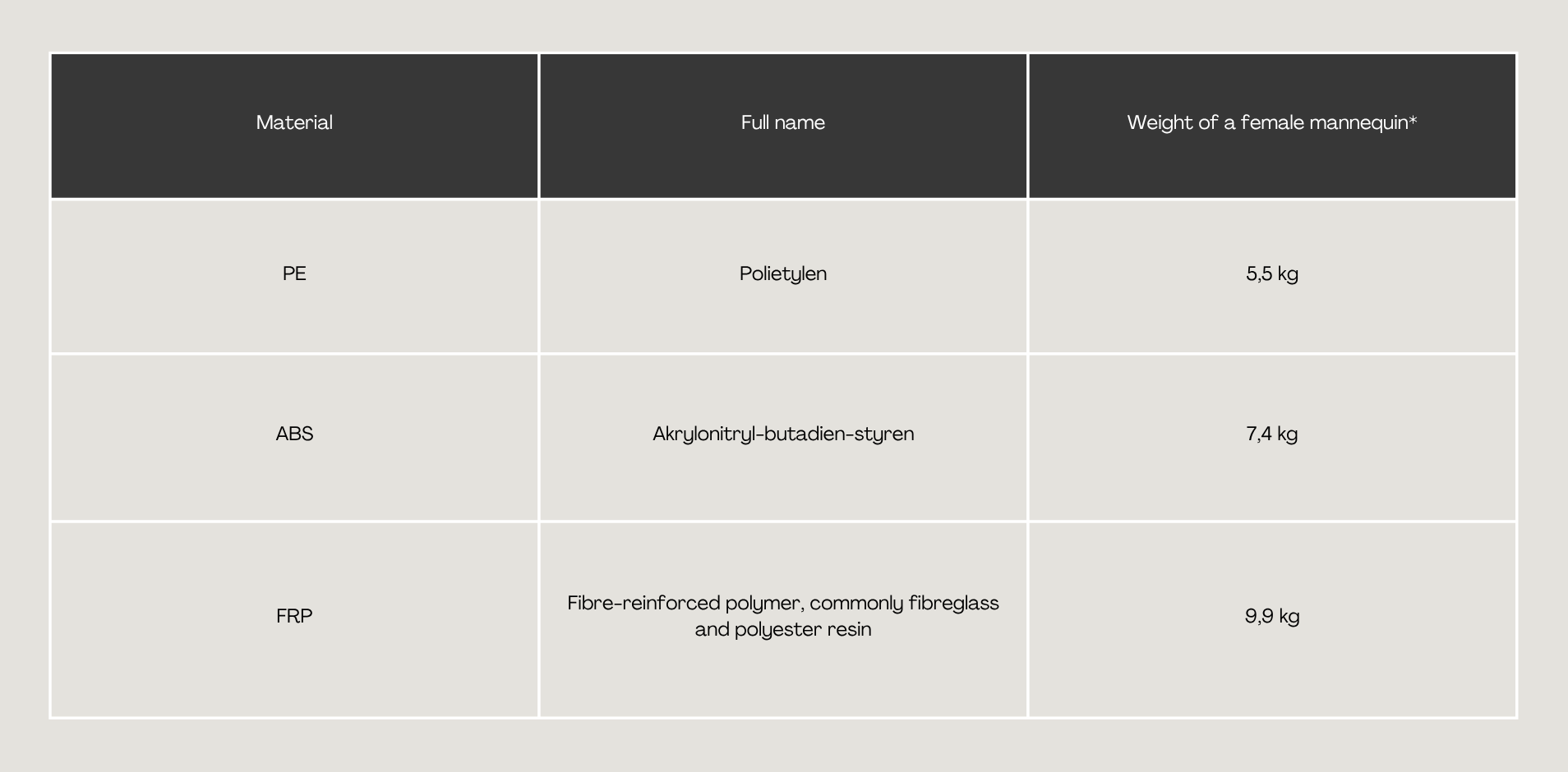
* Weight without base.
The difference between 5.5 kg and 9.9 kg means that a PE mannequin, such as a model from our OMNI collection, is approximately 44% lighter. When a display includes several or even a dozen figures, that translates into tens of kilograms less to lift, carry and reposition. A lighter mannequin reduces the physical demands placed on staff, but the benefit goes further than that. It also makes new collection roll-outs, window adjustments and the everyday work of a visual merchandiser more efficient. This is one reason lightweight mannequins are often regarded as a premium solution within the industry.
Size and proportions of the figure
The type of mannequin affects its weight indirectly through its dimensions and the amount of material required to produce each component. A male mannequin may therefore weigh more than a female model, although a meaningful comparison should always be made between figures produced using the same materials and technology.
To illustrate the scale of the difference, a full-body female mannequin may weigh 9.9 kg, a male mannequin 11.9 kg, and a child mannequin representing an approximately six-year-old figure 6.2 kg. These are not universal values for every collection, but they provide a useful reference when planning transport, display changes and the choice of base.
Type of base
The base can add between 2.6 and 5 kg to the total weight. A lighter glass base remains visually discreet, which can be particularly valuable in minimalist fashion displays. A heavier metal base offers greater stability and durability, especially in high-turnover retail environments where mannequins are redressed frequently.
Expert view: which material is best when mannequin weight matters?
When mannequins are regularly redressed and moved, PE is currently one of the most practical options available. A comparable model can weigh almost 45% less than an FRP mannequin, and the benefit is not limited to transport. It also makes display work faster, from removing the figure from its base and changing the outfit to reassembly. Lower weight does not mean compromising on durability.Polyethylene is an unbreakable material and handles the demands of everyday use on the shop floor and in the stockroom better than traditional FRP constructions. PE mannequins can have a service life of up to 10 years. In colour-through models, the pigment runs through the material rather than sitting in a surface layer of paint. There is no lacquer coating to chip, and minor scratches are far less noticeable. This helps the mannequin retain a clean, polished appearance for longer.
PE also offers cost and environmental advantages. Automated production and the absence of a painting stage can reduce the price of the finished mannequin. The material is 100% recyclable and may contain recycled raw material. This can make PE mannequins a more environmentally responsible choice for retailers looking to reduce the impact of their store equipment.
The technology does have its limitations. On unpainted models, mould seams may be visible at close range. Producing new moulds is also expensive, which means PE collections often include fewer poses than ranges made from FRP. For retailers prioritising low weight, durability and efficient handling, however, this is often a sensible compromise and ultimately the most practical solution.
Konrad Szafirowski – expert in mannequin design and retail displays for the fashion industry
How does mannequin weight affect day-to-day retail work?
Mannequin weight matters most when displays are updated regularly. Rolling out a new collection usually involves redressing the figure, releasing and reconnecting selected fittings, and positioning the mannequin in the right place. When several figures are involved, the physical demands on the team increase noticeably during each display change.
A lighter mannequin makes everyday display work easier by supporting:
- faster repositioning in the shop window or on the shop floor,
- quicker adjustments to poses and styling,
- easier movement between different areas of the store,
- more efficient visual merchandising updates,
- smoother display preparation when staffing levels are limited.
We also calculated how much time a retailer can save by choosing lightweight PE mannequins instead of heavier FRP models. The difference can be as much as four minutes per mannequin.
Two display changes per month across 20 female mannequins
PE mannequins
- 20 × 3 minutes = 60 minutes per display change
FRP mannequins
- 20 × 6–7 minutes = 120–140 minutes per display change
Per month
- PE: 2 hours
- FRP: 4 hours–4 hours 40 minutes
- time saved: 2 hours–2 hours 40 minutes per month
Per year, based on 24 display changes
- PE: 24 hours
- FRP: 48–56 hours
- time saved: 24–32 hours per year
That is the equivalent of approximately three to four full eight-hour working days. The impact is greatest for retailers that regularly rebuild their windows or work with larger numbers of mannequins. In those environments, reducing the time and effort required for each figure can make display updates considerably more efficient.
Is the lightest mannequin always the best option?
Low weight is a major advantage, but it should not be the only factor considered. A mannequin must also suit the brand’s visual identity, the type of clothing being displayed and the way the store organises its visual merchandising work.
PE is likely to be a good choice for retailers that:
- update collections and displays frequently,
- need mannequins that are easy to move,
- prioritise durability,
- expect fast assembly,
- want to reduce visible chips and signs of wear.
FRP, however, can offer greater flexibility when developing new designs and a broader choice of poses. When a specific or unusual position is central to the visual concept, choosing a heavier model may be entirely justified.
How much does a complete shop mannequin weigh?
To calculate the total weight of a complete mannequin, add the weight of the figure to the weight of its base.
A female PE mannequin weighing 5.5 kg will weigh:
- 8.1 kg with a glass base,
- 10.5 kg with a metal base.
A female FRP mannequin weighing 9.9 kg will weigh:
- 12.5 kg with a glass base,
- 14.9 kg with a metal base.
The weight of the body alone does not show the full load involved when positioning or moving a mannequin. Once the base is included, the difference between the lightest and heaviest combinations shown here reaches 6.8 kg.
Mannequin weight depends on the material, the type of figure and the base, so a single number in the specification never tells the whole story. In day-to-day retail work, it affects the speed of display changes, ease of handling and the stability of the finished arrangement. Lightweight models, particularly those made from PE, are especially practical where mannequins are redressed and repositioned frequently. The final choice should balance low weight with durability, fast assembly and the specific way the store manages its displays.
FAQ
How much does a female shop mannequin weigh?
A standard full-body female mannequin usually weighs around 10 – 12 kg without its base. Depending on the material, a comparable model may weigh approximately 5.5 kg in PE, 7.4 kg in ABS or 9.9 kg in FRP.
How much does a male shop mannequin weigh?
A male mannequin may weigh around 12 kg. The exact figure depends on the model and the material used.
How much does a child shop mannequin weigh?
A mannequin representing an approximately six-year-old child may weigh around 6.2 kg without its base. Models designed for other age groups will have different weights.
Which type of mannequin is the lightest?
Of the materials compared here, PE produces the lightest mannequins. A typical female PE model weighs around 5.5 kg, making it almost 45% lighter than a comparable FRP figure.
Does the stated mannequin weight include the base?
In most cases, the stated weight refers to the mannequin body without its base. Always check the product specification to confirm whether the base has been included.
How much does a mannequin base weigh?
A glass base with a support rod weighs around 2.6 kg, while a metal base with a support rod weighs approximately 5 kg.
Our expert, Konrad Szafirowski – an entrepreneur, investor and expert in mannequin design and retail displays for the fashion industry. For more than 20 years, his company, MORE Mannequins, has designed and manufactured mannequins for fashion brands and retailers. In recent years, the company has placed a strong focus on planet-friendly solutions. By introducing new technologies developed under the WISE by MORE Mannequins brand, it has reduced the carbon footprint associated with production by 60%.