
Museum Mannequins – Flexible Figures for Authentic, Conservation‑Safe Displays
Introduction: Why Museum Mannequins Still Matter
Walk into any fashion, history, or ethnographic museum and you will notice something that no interactive screen or wall label can replace: a figure standing in the room, dressed in a garment that once belonged to a real person. Museum mannequins are storytelling objects in exhibitions, not neutral props. They humanize historical artifacts by representing garment wearers, giving visitors an immediate, visceral sense of how a coat hung on a shoulder, how a corset reshaped a torso, or how a uniform signaled rank. Without them, exhibitions risk reducing clothing to flat, lifeless fabric pinned behind glass.
Yet not every institution embraces them. Some museums keep mannequins in storage despite not using them for displays, while others have scaled back their use over concerns about outdated aesthetics or problematic associations. Mannequins have a long history in museum displays, and that history is not uncomplicated - they have been used in exhibitions to promote colonialism and consumerism, and some older installations reinforced racial stereotypes rather than challenging them. The book Mannequins in Museums discusses their historical and contemporary use, tracing how the field has evolved from crude wax figures to the sophisticated conservation-grade forms available today. The question for modern institutions is not whether to use mannequins at all, but how to use them thoughtfully.
At MORE Mannequins, we design professional museum mannequins specifically for exhibitions, conservation needs, and long-term displays. Our range includes flexible, articulated models that allow curators to adjust posture and gesture without compromising the garments they protect. Mannequins bridge the gap between clothing and the identities associated with them - and when that bridge is well built, visitors leave with a deeper understanding of the people, periods, and cultures behind the objects.
In many museums, mannequins help present uniforms, historical costumes, and everyday clothing in lifelike poses, supporting visitor engagement and interpretation. They illustrate how clothing enforced social norms and distinctions, from the rigid structure of a Victorian mourning dress to the functional cut of a wartime flight suit. The rest of this article will answer what museum mannequins are, how flexible articulated models work in practice, and how curators can choose the right form for their collection.
What Is a Museum Mannequin? From Static Forms to Flexible Figures
A museum mannequin is a display figure engineered for conservation-safe, historically accurate presentation of garments and equipment. Unlike a commercial shop mannequin designed to sell the latest season's look, a museum mannequin prioritizes inert materials, long-term stability, and proportions that match the body of the original wearer rather than an idealised fashion silhouette.
Traditional museum mannequins are rigid bodies made from fiberglass, solid resin, or molded polystyrene. They offer a single fixed pose, neutral or abstract facial features, and matte finishes that avoid glare under gallery lighting. Their body proportions tend to reflect 19th- or 20th-century averages - shorter statures, narrower shoulders, different waist-to-hip ratios than what you would find on a retail shop floor. Mannequins recreate specific physical shapes of historical garments, so accuracy matters more than aspiration. French museums are noted for their use of mannequins in costume galleries, and many institutions worldwide follow similar conventions: discreet stands, non-reflective surfaces, and simple mechanisms for dressing and undressing.
Museums' needs differ sharply from retail. A shop mannequin may rotate seasonally; a museum figure can stand dressed for months or years. Surfaces must photograph well without flash reflections, and curators need the option to add custom padding - batting, acid-free tissue, conservation-grade under-structures - to support fragile textiles without strain on seams or embellishments. Mannequins help contextualize clothing and reflect the human scale, which is something a flat vitrine or a hanger can never accomplish. Historical garments can distort when displayed flat without mannequins, losing the three-dimensional silhouette that gives them meaning.
The modern evolution of the museum mannequin is the flexible, articulated figure. These models feature an internal bendable frame, a soft foam or polyurethane core, and a textile outer cover - typically an elastic cotton knit - that allows curators to gently adjust posture and limb angles. In MORE Mannequins' flexible museum range, the body can be shaped in multiple planes: not just elbows and knees, but shoulders, spine segments, hips, wrists, and even fingers, enabling natural, narrative poses while the figure remains stable on its base.
Modern mannequins also reflect diverse body types to challenge historical standards that once defaulted to a single idealised form. Available figure types include adult male and female models in various historical proportions, as well as children's mannequins at heights around 84 cm and 118 cm for early childhood and older child sizes.
|
Attribute |
Traditional Rigid Mannequin |
Flexible Articulated Mannequin |
|---|---|---|
|
Material |
Fiberglass, solid resin, polystyrene |
Polyurethane foam core, metal skeleton, textile cover |
|
Pose options |
One fixed posture |
18+ body joints, adjustable in multiple planes |
|
Best use cases |
Uniform rows, static long-term displays |
Narrative scenes, dynamic poses, frequently rotated exhibitions |
|
Surface |
Hard, matte-painted composite |
Soft elastic cotton jersey, neutral colours |
|
Dressing ease |
Limbs may detach; limited adjustment |
Limbs reposition without removal; fine-tuning possible |
Construction of a Flexible Museum Mannequin
A flexible museum mannequin is built around an internal articulated skeleton - a framework of metal or composite joints that runs from the neck through the spine, into the shoulders, elbows, wrists, hips, knees, and ankles. This skeleton is surrounded by soft polyurethane foam, shaped and carved into a neutral human form that provides the body's volume and surface contour without the rigidity of fiberglass.
Advanced models, such as those produced by MORE Mannequins, typically offer around 28 bending points in total. Approximately 18 of these sit in the main body - neck, multiple spine segments, both shoulders, elbows, wrists, hips, knees, and ankles - while the remaining 10 are distributed across the fingers, allowing basic hand shaping. This means a curator can position a male flexible mannequin to grip a sword hilt, or arrange a female figure's hand to rest naturally on a parasol.
The outer layer is a close-fitting, breathable, and elastic cotton or cotton-blend jersey cover, usually in a neutral colour - off-white, grey, or black - that allows garments to slide on without snagging delicate fibres. The cover can be removed, washed, or replaced over time, which is a practical advantage for long-running exhibitions where dust and handling gradually soil surfaces.
Joints are engineered to move smoothly yet hold position firmly. Internal friction or locking mechanisms at key articulation points mean a curator can set a pose once and rely on it for months without visible sagging or drift, even under the weight of heavy wool uniforms or layered period costumes. The construction prioritises conservation throughout: there are no sharp edges that could catch on fragile fabric, no reactive finishes that might off-gas against textiles, and the option to apply additional conservation padding underneath garments for extra protection.
Flexible vs Classical Museum Mannequins – When to Choose Which
Classical rigid mannequins remain the right choice for static, repeated displays of similar garments - a row of 18th-century regimental coats, for instance, or a gallery of identical clerical vestments. Their smooth, hard surfaces hold the silhouette of very fitted couture gowns with crisp precision, and dressing them can be simpler when the garment is highly structured and the pose is predetermined. The reason many museums still maintain large inventories of rigid forms is straightforward: they are durable, affordable, and do the job when narrative complexity is not required.
Flexible mannequins excel when the display needs to tell a story. Consider a scene in a military museum: a World War II infantryman carrying a rifle at the ready, torso slightly rotated, one knee bent as if advancing. Achieving that pose on a fixed-form mannequin would require a custom sculpture. With a bendable mannequin, the same effect takes an hour of careful adjustment. Flexible bodies allow fine-tuning of arm positions to show how an object was actually used - a nurse supporting a patient, a skier leaning into a turn, a weaver's hands on a loom - which is hard or impossible with fixed-pose models.
Many museums wisely combine both types. Static mannequins handle the straightforward "wall of uniforms" galleries, while a smaller group of flexible figures is reserved for high-impact narrative scenes - the centrepiece diorama, the immersive room reconstruction, the temporary exhibition that demands a fresh pose every season. The practical recommendation is to assess existing collection types, rotation frequency, and staff capacity before deciding how many flexible versus classic units to invest in. A museum that changes exhibitions quarterly will get far more value from flexible models than one that installs a permanent gallery refreshed every decade.
Where Flexible Museum Mannequins Excel: Concrete Use Cases
Flexible museum mannequins are especially valuable wherever movement, interaction, or specific gesture helps interpret an object. The following scenarios illustrate how different museum types put articulated figures to work.
Fashion and costume museums demand mannequins that do more than simply hold a garment upright. Dressing a 1950s day dress means positioning the arms with a slight bend at the elbows so that gloves are presented naturally, the wrist turned just enough to let a handbag sit at the correct angle. An 18th-century open robe requires a turned torso to reveal the decorated stomacher and layered petticoats at the back. Customized mannequins can emphasize craftsmanship and cultural signaling of attire - the drape of a bias-cut silk, the volume of a crinoline - in ways that a flat display or a rigid form simply cannot match. At institutions like Historic Royal Palaces, conservation teams build custom underpinnings so that every garment is presented exactly as it would have been worn, with flexible figures providing the posture adjustments needed to get there.
History and military museums rely on realistic stance to convey context instantly. A Cold War pilot seated in an ejection seat, hands on the instrument panel. A 19th-century cavalry officer reaching for a sabre. A paramedic crouching beside a stretcher. In each case, the articulated joints - especially shoulders, elbows, wrists, and fingers - transform a static garment into a scene that visitors read intuitively. Mannequins can recreate social situations through dynamic groupings, such as a command post with three figures around a map table, each in a distinct posture that communicates rank and role.
Ethnographic and social history museums use mannequins to reconstruct everyday activities - weaving, bread baking, market trading - where hand and torso positions make tools and gestures legible. A figure hunched over a loom with fingers threaded through warp yarns tells a richer story than the loom alone ever could. These scenes are where mannequins are used as storytelling objects in exhibitions most powerfully, giving visitors access to vanished daily routines.
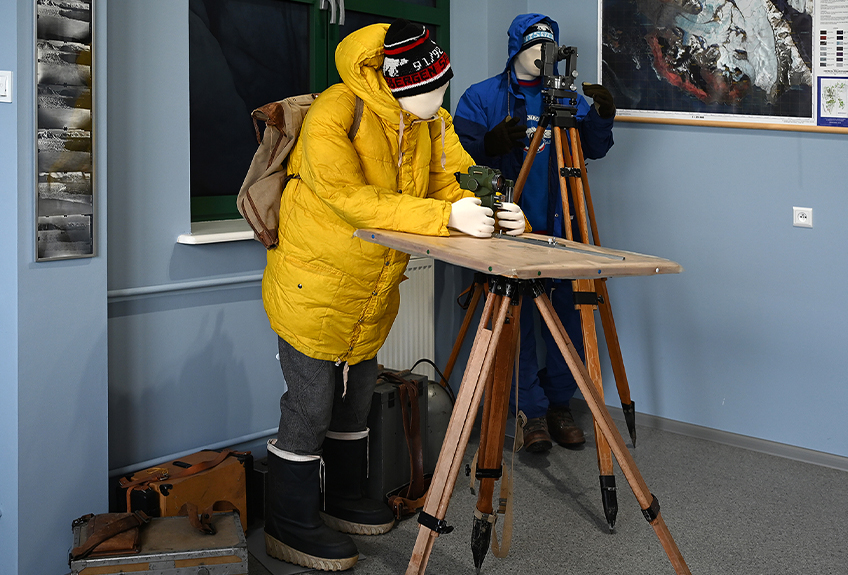
Technical, transport, and sports museums present unique challenges: a mannequin must sit correctly in a 1960s racing car cockpit, lean over bicycle handlebars, or adopt a dynamic skiing pose. Standard rigid forms are rarely built for seated or crouching positions, but flexible models with adjustable hip and knee joints handle these postures as a matter of course.
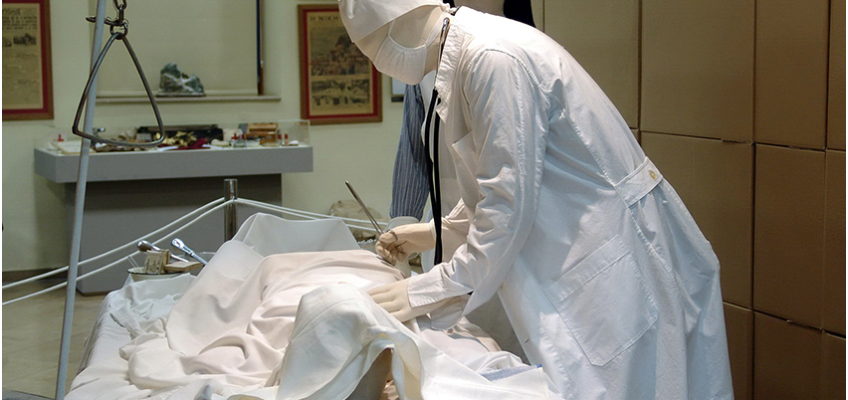
Medical and nursing museums offer perhaps the most vivid example. The Danish Museum of Nursing History features mannequins on its front page, showing scenes of bedside care, surgical preparation, and patient interaction. Nuanced arm and hand positions help recreate authentic procedure settings - a nurse adjusting an IV line, a surgeon holding a retractor - that would be meaningless without the correct gesture. It is worth noting, however, that not every medical institution has embraced these figures: mannequins were removed from Medical Museion's public exhibitions over a decade ago, reflecting different institutional philosophies about the role of human-like figures in clinical history.
MORE Mannequins works with museums to preconfigure poses and provide guidance on how to adjust figures safely when the exhibition storyline changes, ensuring that the investment continues to serve new narratives.
Visitor Reactions and Aesthetic Considerations
Visitors respond to mannequins with more emotion than most curators initially expect. Creepy mannequins evoke mixed reactions from museum visitors - a figure with too-realistic eyes, overly glossy skin, or a frozen half-smile can push the experience from immersive to unsettling, triggering the "uncanny valley" discomfort more commonly associated with waxwork chambers than cultural institutions. At the same time, carefully designed mannequins enhance visual engagement in exhibits, drawing attention to garments and artifacts that might otherwise be overlooked. The balance is delicate, and mannequin choices can affect cultural interpretations and viewer understanding far more than a wall label or audio guide.
Museums manage these reactions through deliberate design. Neutral or abstract faces - egg-shaped heads, featureless silhouettes, simple geometric forms - sidestep the uncanny problem entirely. Matte finishes prevent the waxy sheen that visitors associate with horror props. Thoughtful lighting and generous spacing between figures allow mannequins to function as "silent actors" in the gallery: guiding attention, demonstrating posture, and adding atmosphere while keeping visual focus firmly on the garments and artefacts they carry. Exhibitions increasingly highlight authentic representation in mannequin design, with contemporary museums treating mannequin design as a form of curatorial decision-making rather than an afterthought delegated to installers.
The institutional identity of the museum should guide aesthetic choices. History museums tend toward restrained, timeless body types and calm poses. Fashion or contemporary design exhibitions may embrace bolder, more sculptural postures that align with the energy of the garments on display. MORE Mannequins supports this range by offering customisation - colour of fabric covers, removable heads in abstract or more realistic styles, and different stand types - so museums can calibrate the aesthetic from very discreet to deliberately dramatic. The goal, in every case, is to ensure that images of the exhibition in catalogues, press materials, and visitor photographs show figures that enhance the story rather than compete with it.
Conservation and Practical Handling Benefits
One of the strongest arguments for flexible museum mannequins is conservation. Historical garments can distort when displayed flat without mannequins, but forcing a fragile 200-year-old garment onto a rigid form that does not match its proportions creates a different kind of damage - stretched seams, cracked embroidery, compressed linings. Flexible museum mannequins can be gently adapted to the garment rather than forcing a garment to fit a fixed posture. Mannequins preserve fragile textiles by providing internal support that distributes weight evenly and reduces point stress.
The typical dressing workflow begins with selecting a mannequin whose base dimensions - height, chest, waist, hip - approximate the garment. Conservators then add soft, acid-free padding and under-structures: cotton batting shaped to support a 19th-century bodice, rolled tissue to fill out a sleeve, polyester fiberfill to round a shoulder. The Chicago History Museum, for example, uses nylon pantyhose as a second skin over which padding is carefully sculpted to match the original wearer's proportions. With a flexible mannequin, the pose is then adjusted slightly - an elbow eased outward a few degrees, a wrist rotated - to let the fabric drape naturally from underneath rather than being stretched to fit.
Soft polyurethane and textile covers are far kinder to delicate textiles than hard, glossy plastic or fiberglass. The cotton jersey surface creates minimal friction against silk linings, lace trims, and fragile appliqué. Covers can be removed and washed or replaced as needed, maintaining hygiene and appearance over years of continuous use without any chemical risk to the garments they support.
Practical handling matters in busy institutions. Flexible mannequins are lighter than solid fiberglass, easier to carry through narrow museum corridors or up stairs, and their limbs can be carefully repositioned rather than fully detached for dressing - reducing the risk of accidental drops or surface damage. MORE Mannequins provides technical documentation and training tips to museum teams, covering safe bending limits, recommended tools such as cotton or nitrile gloves, and routine maintenance checks on joints and cover tension.
How to Choose Museum Mannequins for Your Collection
Selecting mannequins for a museum is a curatorial decision, not just a procurement task. The right museum mannequin balances storytelling, conservation, budget, and logistics. Planning ahead avoids the costly cycle of buying generic figures, discovering they do not fit the garments, and re-buying a year later.
Start from the collection. List the main categories of objects: early 20th-century military uniforms, children's clothing from the 1960s, contemporary fashion installations, ethnographic garments. Define which categories require flexible poses - narrative scenes, seated figures, dynamic gestures - and which can sit comfortably on static forms. A permanent gallery of identical ceremonial robes needs rigid mannequins; a rotating exhibition on everyday life needs flexibility. Some museums keep mannequins in storage despite not using them for displays, usually because the figures were purchased without matching them to actual collection needs. Avoid that outcome by working from the objects outward.
Proportion and size. Choose mannequins with historically appropriate body dimensions. Early 20th-century female clothing typically requires lower average height, narrower shoulders, and different bust-to-waist ratios than contemporary garments. For children's displays, heights of approximately 84 cm and 118 cm match the most common garment sizes in museum textile collections. Modern mannequins reflect diverse body types to challenge historical standards, but in a museum context, the garment - not a fashion ideal - dictates the form.
Pose and articulation. Determine how many figures must sit, kneel, or reach versus stand in a neutral upright position. Flexible mannequins with around 18 body joints and movable fingers are the most versatile for complex scenes, but a museum that only needs standing figures may not require that level of articulation. Match the tool to the task.
Surface and finish. Matte, neutral fabrics photograph well under gallery lighting and do not distract from the object. Off-white and light grey covers work for most history and ethnographic exhibitions. For fashion exhibitions, darker covers or custom colours that align with the exhibition design can add drama. The finish should support how objects are presented to the public, not compete with them.
Sustainability and durability. Many museums now operate under explicit environmental policies. Mannequins with recyclable components, repairable skeletons, and washable covers align with those goals. The V&A, for example, collaborated with Proportion London to create sustainable mannequins using biodegradable papier-mâché for its Fashioned from Nature exhibition. MORE Mannequins' own sustainable lines reflect this same principle: long life cycles, eco-conscious materials, and components designed for repair rather than replacement. Broader industry conversations, such as those documented by the American Alliance of Museums, are pushing display materials toward lower-carbon alternatives.
Budget and procurement. The most cost-effective approach is usually a mixed inventory: a core set of high-quality flexible mannequins for key narrative displays, plus a larger group of simpler static forms for repetitive or long-term installations. Working directly with a manufacturer can reduce per-unit cost and enable custom modifications - adjusted proportions, specific cover colours, branded base plates - that off-the-shelf products cannot deliver. For a detailed walkthrough of specifications and selection criteria, our ultimate mannequin selection guide for museums covers the process step by step.
Mannequins have been used in exhibitions to promote colonialism and consumerism in the past, but contemporary museum practice demands something better. Today, exhibitions can use mannequins that respect the garments, the people who wore them, and the audiences who come to learn. The mannequin you choose is not a background detail - it is a curatorial statement about how your institution values its collection and its visitors.
If you have a question about which flexible or classical mannequins would work best for your upcoming exhibition, or if you need custom builds adapted to conservation standards, reach out to the MORE Mannequins team by email or add the models you are considering to your cart for a detailed quote. Every collection deserves figures that tell its story with accuracy, care, and respect.